Furniture Guide
How to Evaluate a Sofa’s Frame, Cushions, and Footprint
A sofa can look just right in a showroom and still feel oversized, awkward to use, or difficult to live with at home. Before falling for the silhouette, take a closer look at the measurements, construction, and cushion layout. The Cisco Home Safia Sofa offers a useful case study in how to turn those details into a more confident decision.
Published November 6, 2026
A sofa is more than a large piece of furniture. It sets the tone for a living room, shapes how people gather, and can become the preferred spot for reading, relaxing, or simply taking a breather at the end of the day. Because it is often one of the room’s biggest purchases, choosing well means balancing the look you love with the practical details you will notice every day.
That balance starts with three essentials: footprint, frame, and cushions. Footprint tells you whether the sofa will fit the room and arrive through the door. The frame and support system provide its underlying structure. The cushions influence how the seating feels and how the sofa works for the people who use it. Upholstery, finish, and care instructions matter too, but those elements make the most sense when considered alongside the sofa’s proportions and construction.
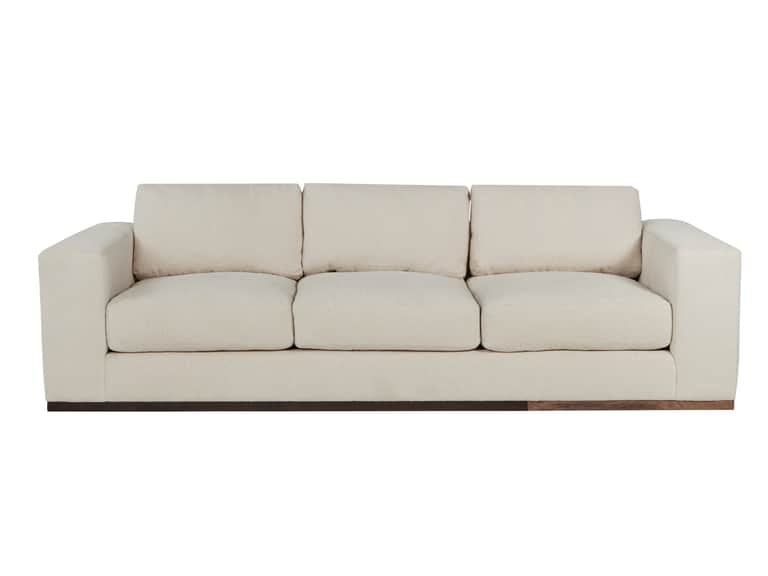
The Cisco Home Safia Sofa brings these questions into focus. Its listed overall dimensions are 99 inches wide, 41 inches deep, and 24 inches high. It has three seat cushions and three back cushions, an 80-by-26-inch sitting area, webbing support, and a frame described as FSC® Certified hardwood. Looking at those specifications one by one can help clarify what to measure and what to ask before making a choice.
Begin with the room, not the sofa
It is tempting to start with upholstery color or a striking profile. But before comparing finishes, take stock of the room. A sofa may have appealing proportions on a product page and still occupy too much floor area, block a walkway, or crowd the route between the entry and the rest of the room. A simple floor plan can prevent that disappointment.
Measure the available area where the sofa will sit, including the full width and depth you can comfortably give it. Then look beyond the sofa’s footprint. Consider where people will walk, whether drawers or doors need to open nearby, and how the seating relates to a coffee table or other furniture. A room can accommodate a large sofa on paper yet feel cramped if there is no comfortable circulation around it.
For the Safia, the 99-inch width makes it a substantial piece. Its listed 41-inch depth also deserves attention: depth affects how far the sofa extends into the room and how much floor remains between the seating and nearby furniture. Marking these dimensions with painter’s tape can give you a useful, low-effort preview. Stand back, walk around the outline, and imagine the room in use rather than judging the taped rectangle from one angle.
Remember that overall dimensions and usable seating dimensions are not interchangeable. The Safia’s listed sitting space is 80 inches wide and 26 inches deep, compared with its overall width of 99 inches and overall depth of 41 inches. Arms, back construction, and other parts of the sofa account for space outside the sitting area. If you want to estimate how it will feel for lounging or sharing, look at both sets of numbers.
Height can shape the room’s visual balance as well as comfort. The Safia is listed as 24 inches high, with an 18-inch seat height and 24-inch arm height. Check these figures against the height of nearby tables, windows, and other furnishings. If possible, compare the seat and arm heights with a sofa or chair you already find comfortable. The numbers offer a useful starting point, but your own posture and preferences should have the final say.
Measure the route to the room
A sofa that fits its final location still has to make it there. Measure the entry door, interior doors, hallways, staircases, landings, elevators, and any tight turns along the delivery route. Pay attention to ceiling height and fixed obstacles, too. A doorway’s nominal width is only part of the puzzle if a narrow corridor or sharp turn follows it.
When checking the Safia’s 99-inch width and 41-inch depth, do not assume the sofa can be turned or tilted through every passage. Ask the retailer or delivery team for the packed or shipping dimensions and any guidance on how the piece can be maneuvered. Product dimensions describe the assembled sofa; delivery requirements may involve different measurements. Confirming both early is far easier than discovering a problem on delivery day.
Make a short access checklist before ordering:
- Measure the clear opening of each doorway and the width of hallways.
- Record ceiling heights and note low fixtures or stair rails.
- Check turning space at landings, corridors, and room entrances.
- Ask whether legs or other components can be removed for delivery.
- Confirm the delivery team’s requirements for access and packaging.
The Safia’s product details list its 2-inch legs as not removable. That is a detail worth including in delivery planning, not a reason to assume the sofa cannot be delivered. The key is to check the exact route and current delivery guidance with the seller before purchase.
Look beneath the upholstery: the frame matters
Upholstery gives a sofa much of its visual character, but the frame is part of its foundation. When evaluating furniture construction, look for clear information about frame material and how the structure is supported. A product description that identifies these elements gives you more to work with than a general promise of comfort or durability.
The Safia’s listed construction includes an FSC® Certified hardwood frame and webbing support. FSC certification relates to responsible forest management standards; it should not be treated as a guarantee of every aspect of a sofa’s environmental footprint or a substitute for reviewing the product’s full materials and manufacturing information. Still, when sustainability is part of your buying decision, a specific certification is a concrete detail to note and, if necessary, verify with the seller.
Webbing is the stated support system for the Safia. In a sofa, the support beneath the seat contributes to the way the cushions are held and how the seating feels. The term alone does not tell you exactly how the sofa will perform for your household, so it is reasonable to ask how the support is constructed, whether it is accessible for service, and what the warranty covers. These are practical questions, particularly for a piece expected to see regular use.
Try not to judge frame quality by appearance alone. A handsome base or a well-finished exterior may say something about design, but it does not reveal every structural detail. Review the specifications, ask for clarification on anything that is unclear, and consider the manufacturer’s warranty and service information. If testing the sofa in person is possible, pay attention to whether it feels stable when you sit down or shift position. A brief showroom visit cannot predict years of use, but it can help you assess immediate comfort and steadiness.
The Safia also has a reclaimed oak base finished with a natural wine dye and clear sealer; its description notes that the color may vary. That variation is useful to keep in mind if you are coordinating the sofa with existing wood pieces. Natural-looking finishes can differ, so request current details if a close color match is important to your room.
Cushion layout shapes how seating works
Cushions affect the everyday experience of a sofa: how many people can settle in, where they sit, and how the seating looks when the room is put back in order. The Safia has three seat cushions and three back cushions. That arrangement creates distinct seating sections, but it does not automatically mean that every person will use one cushion or that the sofa will suit every posture. Body size, preferred sitting position, and how the sofa is used all play a part.
The listed sitting area measures 80 inches wide by 26 inches deep. Those dimensions help make the usable space more tangible than the overall footprint alone. If several people will regularly share the sofa, think about how the seating sections align with that routine. If one person often stretches out, consider whether the sitting depth and cushion layout seem accommodating. People who prefer an upright perch may have different priorities from those who like to curl up or lounge.
Pay attention to seat height as well. At 18 inches, the Safia’s listed seat height can be compared with chairs and sofas you already use. A seat that feels comfortable to one person may feel low or high to another, and the cushion itself can affect how the seated position feels. If you can visit a showroom, sit for more than a moment and try several natural positions. Notice whether your feet rest comfortably, whether standing up feels easy, and whether the back cushions provide the kind of support you prefer.
The product description does not specify the cushion filling or firmness. Avoid guessing from photographs or from the number of cushions. Instead, check current product specifications and ask the retailer about cushion materials, firmness, maintenance, and whether the cushions are reversible or replaceable. Those answers can influence both comfort and long-term upkeep. A cushion that can be turned or rotated, if the design allows it, may offer more flexibility in managing use; confirm the details rather than assuming.
Ask how the sofa is expected to be maintained. Find out whether cushions need routine fluffing, whether covers can be removed, and what cleaning methods are permitted for the selected upholstery. The Safia is described as upholstered, with a fabric requirement of 18 yards that may vary. Its product details also state that it is not customizable, so verify the available upholstery choices and the exact configuration before ordering.
Consider fabric, finish, and household routines
Even a well-proportioned sofa has to fit the rhythm of the home. Think about who will use it and how often. A living room used for frequent gatherings may need upholstery that can handle regular contact and a care routine that feels manageable. A quieter room may allow for different priorities, such as a particular texture or color. If children, pets, or spills are part of everyday life, ask about cleaning guidance and fabric performance before committing.
The Safia’s listed fabric requirement is 18 yards, with a note that the amount may vary. That figure is a product specification, not a fabric-care rating. Ask for details about the actual upholstery under consideration, including any care instructions, cleaning restrictions, and whether the fabric has special treatments. Follow the manufacturer’s guidance rather than applying an unverified cleaner or stain treatment to a new sofa.
Consider color in the context of the whole room. A neutral shade can work across changing decor, while a stronger color or pattern may become the visual anchor. Look at upholstery samples in the room’s lighting if samples are available. Daylight, lamps, wall colors, and floor finishes can all affect how a fabric reads. For the Safia, the listed base finish may vary in color, so evaluate the wood and fabric together rather than making a decision from isolated swatches.
The sofa’s visual weight matters, too. A long sofa can dominate a smaller room even when there is technically enough floor space. Its base finish and legs may make the piece appear more or less grounded, while the cushion layout and upholstery can change the overall impression. Think about what you want the room to feel like: open and light, cozy and layered, or centered around a generous gathering place. The answer can help you decide whether a 99-inch sofa is the right scale.
A practical checklist before you choose
Before making a final decision, gather the information you need in one place. A little comparison work can make an expensive, long-term purchase feel much less like guesswork. Use this checklist for the Safia or any sofa you are considering:
- Room fit: Have you measured the wall, available floor area, and nearby furniture?
- Circulation: Will there still be comfortable paths through the room and access to doors or drawers?
- Delivery route: Have you checked every doorway, hallway, stair, turn, and elevator?
- Usable seating: Have you reviewed the sitting width and depth as well as overall dimensions?
- Comfort: Do the seat height, depth, and cushion arrangement suit the people who will use it?
- Construction: Do you understand the listed frame material and support system?
- Materials: Have you confirmed upholstery choices, cushion details, and care requirements?
- Finish: Have you considered color variation and how the base will work with existing furnishings?
- Policies: Have you reviewed warranty, delivery, return, and service information?
For a product-specific decision, confirm that you are looking at current specifications. Product listings can change, and details such as available fabrics, delivery options, pricing, and warranty terms should be checked with the seller. If a measurement or material description is important to your decision, ask for confirmation in writing before placing an order.
The right sofa is the one that fits real life
There is no single measurement that makes a sofa perfect. The right choice depends on the room, the people who will use it, and the way they want to sit. A spacious design can be welcoming in a generous living room but overpowering in a narrow one. A three-cushion layout may suit a household that likes clearly defined seats, while someone who prefers uninterrupted lounging may want to compare other configurations. Comfort is personal; construction and dimensions are the facts that help you assess it.
The Cisco Home Safia Sofa makes a helpful example because its listed dimensions, cushion count, hardwood frame, webbing support, and base finish give shoppers specific points to investigate. Its 99-inch width and 41-inch depth encourage careful room planning. The 80-by-26-inch sitting area and 18-inch seat height provide a more focused view of the seating experience. Its product details identify an FSC® Certified hardwood frame and webbing support, while leaving some questions—such as cushion filling and care—worth confirming directly.
Take the time to measure, check access, compare specifications, and consider daily routines. The result is more than a sofa that looks good in a room; it is seating that fits the space, supports the way the household lives, and feels like a considered choice long after the first impression fades.